


You've probably asked yourself how many t-shirts should a man own for a minimalist wardrobe, and gotten a dozen different answers. Some say three. Others say fifteen. Most of those numbers are pulled out of thin air, disconnected from how you actually live, dress, and do laundry. The real answer depends on a few practical factors that nobody seems to want to talk about honestly.
At SÖMNAD, we build premium everyday essentials around one idea: less, but better. Fewer shirts in the drawer, each one worth reaching for. That philosophy puts us right in the middle of this conversation, not because we want you to buy more, but because owning fewer, higher-quality tees is the entire point of what we do.
This guide breaks down a clear, realistic number based on your lifestyle, laundry habits, and climate. You'll also learn how to choose t-shirts that actually hold up in a pared-back wardrobe, and why fabric weight and construction matter more than most people realize when every piece has to earn its spot.
What a minimalist T-shirt wardrobe really means
A minimalist wardrobe is not a competition to see how few clothes you can own. When people ask how many t-shirts should a man own for a minimalist wardrobe, they're really asking how to stop buying things they don't use and start keeping things they actually wear. The goal is a small set of shirts that covers your real life without excess, redundancy, or guilt about clothes sitting in a drawer untouched for months.
Intentional selection, not deprivation
Minimalism in clothing means every shirt in your drawer has a purpose and gets used regularly. You're not punishing yourself by owning fewer items. You're removing the noise so the shirts you do own work harder for you. Think about it this way: if you open your drawer and immediately know what to grab, your wardrobe is working. If you sift through ten shirts to find the one you actually want to wear, it isn't.
The shift is mental before it's physical. You're moving from owning options you might wear to owning shirts you will wear. That distinction changes everything about how you shop, what you keep, and what you let go.
What "enough" actually looks like in practice
Here's a concrete way to picture a functional minimalist t-shirt wardrobe. Imagine you do laundry once a week. You need enough clean tees to get through seven days without stress, plus one or two spares for unexpected spills or heavy sweat days. That puts most men somewhere between five and ten t-shirts total across all categories, which is far fewer than the average American man owns.
Owning fewer shirts only works when the shirts you keep are genuinely good ones, not just the ones you haven't thrown out yet.
Research consistently shows that the average person wears roughly 20% of their wardrobe 80% of the time. A minimalist approach closes that gap deliberately. You're not trying to be extreme. You're trying to make sure the shirts you own and the shirts you wear are the same group.
Why quality matters more than quantity here
When you cut your t-shirt count down to a tight number, each shirt carries more weight in your daily routine. You'll wear every tee more often, wash it more frequently, and rely on it to hold its shape and color over time. A shirt that fades, stretches, or pills after ten washes isn't a good fit for a minimal wardrobe. It becomes a problem you have to replace sooner, which defeats the whole point.
This is where fabric weight and construction become non-negotiable. A 300-gram cotton tee holds its structure far better through repeated washing than a 150-gram shirt that starts thin and gets thinner. When you're working with a smaller number of pieces, you need each one to last, not just survive the season. Cheap shirts require more replacements, cost more over time, and add friction to a system that should feel effortless.
The three roles a minimal t-shirt collection must fill
Not every tee does the same job. A truly functional minimal wardrobe assigns each shirt a clear role. Your collection needs to cover three basic functions: daily wear in public-facing settings, physical activity like gym sessions or outdoor work, and downtime or sleep. Blurring those lines by trying to make one shirt do all three leads to shirts that wear out fast and look sloppy in the wrong context.
Reaching for that everyday tee should feel automatic, not like a compromise. You don't need a separate shirt for every scenario, but you do need at least one shirt per role that you trust completely in fit, fabric, and durability, not brand names or price tags.
Calculate your number with a simple formula
The simplest way to answer how many t-shirts should a man own for a minimalist wardrobe is to start with a formula, not a random number from a lifestyle article. Your actual number depends on two things: how often you do laundry and how many shirts you wear per day. Everything else adjusts from that base.
Your target number should reflect your real habits, not an idealized version of how you wish you lived.
The base number starts with your laundry cycle
Most men do laundry once a week. If that's you, your base is seven shirts, one per day. Then you add a buffer of two to three extras to cover a stained shirt, an unexpectedly sweaty day, or laundry that runs a day late. That puts your starting point at nine to ten t-shirts before you factor in gym or sleep tees.
If you do laundry twice a week, your base drops to four shirts plus one buffer, so roughly five tees for daily wear. Once-every-two-weeks laundry pushes the base to around fourteen, which is where a minimalist wardrobe starts to feel cluttered. In that case, washing clothes more frequently solves the problem better than buying more shirts.
Apply the formula to your real life
Use this straightforward formula to find your personal number:

Total tees = (Days between washes + 1 to 2 buffer days) + gym tees + sleep tees
Here's how that plays out across three common laundry schedules:
| Laundry frequency | Daily tees (with buffer) | Gym tees | Sleep tees | Total |
|---|---|---|---|---|
| Once a week | 9 | 3 | 1 | 13 |
| Twice a week | 5 | 2 | 1 | 8 |
| Every 10 days | 12 | 3 | 1 | 16 |
Most men land between 8 and 14 tees total when they run this formula against their actual routine. If your number lands above 14, the root issue is usually laundry frequency rather than a genuine need for more shirts. Fix the habit before adding to the pile. If you land below eight, double-check that you've accounted for all three shirt roles: daily wear, physical activity, and downtime. Skipping a category leads to over-wearing individual shirts, which wears them out faster and pushes you back toward buying more.
Adjust for laundry schedule, climate, and sweat
The base formula gives you a reliable starting point, but climate and sweat output can push your ideal count up or down by two to three shirts. Knowing how to apply these adjustments keeps your wardrobe functional without sliding back into excess.
Hot climates and heavy sweaters need more buffer
If you live somewhere hot and humid, or if you sweat heavily during normal daily activity, you'll burn through clean tees faster than the base formula assumes. A single humid commute or outdoor errand can make a shirt unwearable for the rest of the day, which is a problem when your collection runs lean. In that case, add two to three tees on top of your base number to keep things running smoothly.
Running low on clean shirts mid-week defeats the entire point of a wardrobe built around reliability.
A practical way to calibrate this: track how many tees you actually use in a typical week during the hottest month of your year. That peak number becomes your permanent buffer, not a seasonal exception. It's easier to own the right amount year-round than to scramble in summer when your shirts can't keep pace.
Cold climates let you trim the count
In cooler weather, a t-shirt often works as a base layer under a sweater or jacket, which means the outer garment absorbs the day's exposure. Your tees stay cleaner longer. If you regularly layer like this for five or more months of the year, you can safely cut two shirts from your total count without running short at any point.
Think about your typical cold-weather week. If you wear a tee for two full days before it genuinely needs washing, your effective rotation stretches significantly. Many men who seriously consider how many t shirts should a man own minimalist wardrobe find that adjusting for layering season drops their total from ten down to seven or eight without any inconvenience.
A quick adjustment checklist
Run through these adjustments after you calculate your base number:
- Add 2 shirts if you sweat heavily or live in a hot, humid climate year-round
- Add 1 shirt if you exercise daily and wear a dedicated gym tee each session
- Subtract 2 shirts if you layer consistently for five or more months of the year
- Subtract 1 shirt if you work from home and your tees face minimal wear on most days
Apply each adjustment that fits your life, then lock in that final number before moving on to splitting your shirts by role.
Split your tees by job: daily, gym, sleep, backups
Once you know your total number, assign each shirt a specific role before it enters your rotation. Mixing categories without a system leads to your best daily tee getting wrecked at the gym, or your backup shirt quietly becoming a permanent fixture. Treating each tee as a tool with one clear job keeps the whole system honest and extends the life of every piece in your collection.
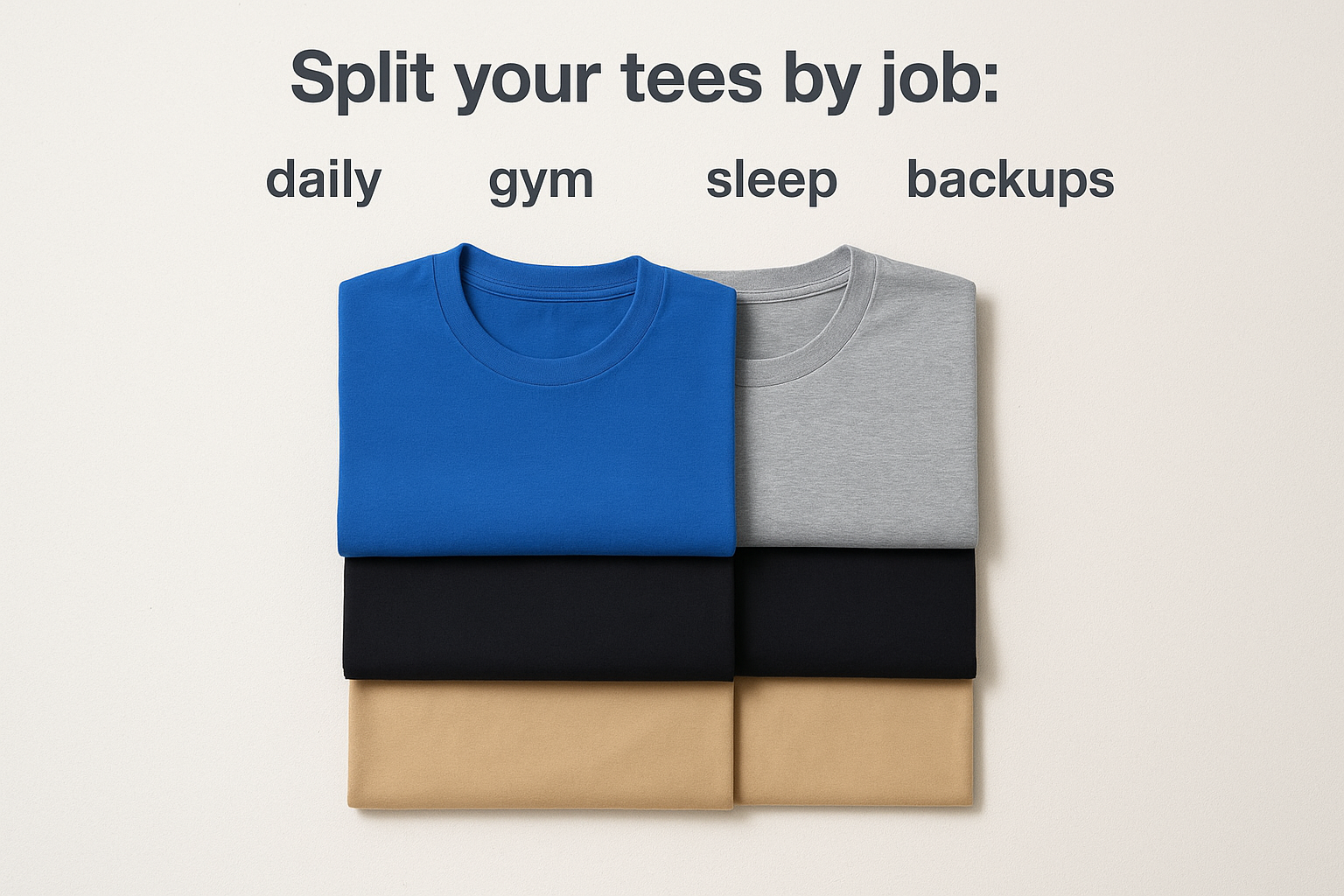
Daily wear tees
Your daily tees carry the most responsibility in a minimalist setup. These are the shirts you wear in public, at work, out to eat, or running errands, which means fit, fabric condition, and overall appearance matter most here. Plan for five to seven daily tees if you wash once a week, or three to four if you wash twice weekly, using the adjusted numbers from your laundry formula.
A daily tee that starts to lose its shape or fade in color belongs in the backup or gym pile immediately, not back in your main rotation.
Pick shirts that hold their structure through repeated washing and look clean and intentional without extra effort. A relaxed fit in a heavier cotton weight handles this role best because it doesn't cling, doesn't wrinkle badly, and maintains its silhouette over months of wear.
Gym and physical activity tees
Gym tees are not daily tees, and trying to use them interchangeably ruins both. Keep two to three shirts specifically for workouts, yard work, or any activity where heavy sweat is expected. Wash these after every single use without exception, which keeps your daily rotation uncontaminated and your gym shirts lasting longer.
Synthetic or lightweight moisture-wicking fabric works best here. Save your premium cotton tees for daily wear where their weight and drape actually pay off.
Sleep and downtime tees
One sleep tee is enough for most men. Wash it twice a week to keep things fresh, and replace it when it stretches past the point of comfort. This slot often gets overlooked when people think about how many t shirts should a man own minimalist wardrobe, but a dedicated sleep shirt protects your daily tees from unnecessary nighttime wear.
Backup tees
Keep one or two backup tees set aside for genuine emergencies: a spill, a last-minute event, or laundry running a day behind schedule. These should be solid, versatile shirts that could step into the daily role if needed, not shirts you're keeping out of habit or sentiment.
Choose a tight color palette and a consistent fit
Once you know how many tees fill each role in your rotation, the next decision is what those shirts look like. Color and fit are the two variables that determine whether your collection works as a unified system or just happens to share drawer space. Getting both right means every shirt in your drawer pairs with everything else you own without any extra thought in the morning.
Build your palette around three core colors
Most minimalist wardrobes anchor around three neutral colors: white, black, and one mid-tone like grey, navy, or stone. That combination covers virtually every daily situation, layering scenario, and casual setting without creating friction when you get dressed. Three colors also means any shirt in your drawer can sit next to any pair of pants you own, which is exactly the kind of effortless utility that answers the practical side of how many t shirts should a man own minimalist wardrobe in real terms.
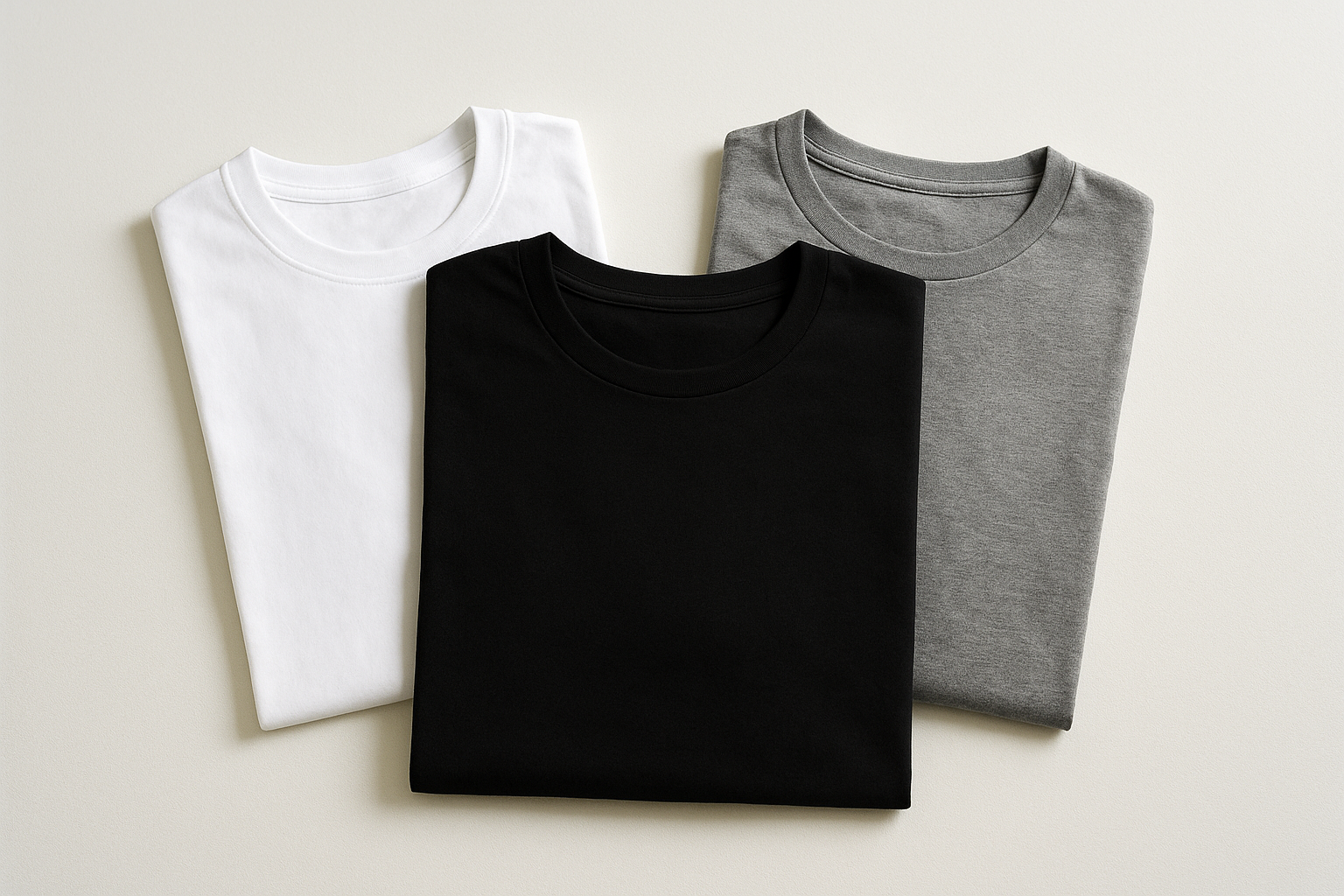
A color that looks great in isolation but clashes with the rest of your wardrobe wastes a shirt slot every time you open the drawer.
Use this simple palette template to structure your daily rotation:
| Color | Recommended count | Works best for |
|---|---|---|
| White | 2-3 | Versatile everyday and layering wear |
| Black | 2-3 | Evening, low-maintenance outfits |
| Grey or navy | 2 | Casual settings, under jackets |
| One optional accent | 1 | Specific outfits, personal preference |
Keep your gym and sleep tees neutral as well, even if they sit outside your daily rotation. Consistent colors across all categories eliminate the mental overhead of deciding which shirt belongs where, which is a small but real source of daily friction.
Stick to one fit across your entire collection
Pick one silhouette and buy only that. Relaxed, fitted, or boxy, whichever works for your body and how you actually dress, then stay there. Mixing fits across a small collection creates constant low-level friction where you second-guess which shirt looks right for a given context instead of grabbing any shirt and walking out the door. A single fit standard turns your drawer into a reliable system rather than a daily decision point.
Fit also directly affects how long each shirt stays presentable. A tee cut with the right amount of ease for your frame holds its visual appeal as fabric softens and relaxes through repeated washing, while a shirt that fits too close loses its shape faster and starts looking worn before its time. Lock in the right fit once and your entire collection stays sharp longer without extra effort.
Prioritize fabric weight, durability, and comfort
When you narrow down how many t shirts should a man own minimalist wardrobe, the physical quality of each shirt becomes the most important variable in the whole system. A heavy, well-constructed tee that survives two years of weekly washing is worth three or four thin shirts that fade and stretch after a season. Fabric weight and construction are not premium extras here. They're the foundation that makes a tight rotation actually work.
Why fabric weight changes everything in a small rotation
Fabric weight is measured in grams per square meter (GSM), and that number tells you more about how a shirt will hold up than any marketing description. Lightweight tees in the 140 to 180 GSM range feel thin from the start and typically lose structure after repeated washing. They're fine for disposable gym use but too fragile for a daily rotation where every shirt carries significant wear frequency.
A shirt in the 280 to 320 GSM range holds its shape, resists pilling, and maintains its color far longer than a lightweight alternative.
Shirts in that heavier range also drape better on the body as cotton softens through washing rather than stretching out of shape. You'll notice the difference at the six-month mark, when a heavy tee still looks intentional and a thin one looks like it belongs in the rag pile. For a minimal wardrobe built around reliability over volume, that durability gap matters enormously.
What to look for in materials and construction
Supima cotton and combed ring-spun cotton are the two materials worth seeking out for everyday rotation tees. Both use longer cotton fibers than standard cotton, which produces a softer feel, tighter weave, and stronger resistance to pilling over time. Standard cotton works for gym tees where you prioritize moisture management over longevity, but your daily wear shirts deserve better raw material.
Beyond fiber type, check construction details before committing to a shirt. These four markers separate tees that last from tees that disappoint:
- Seam quality: Double-stitched side seams hold their shape through aggressive washing cycles
- Collar construction: Reinforced ribbing at the collar resists stretching and retains its structure after dozens of wears
- Preshrinking: Tees that shrink significantly after the first wash create fit problems that compound over time
- Weight consistency: Hold the fabric up to light to check for thin spots or uneven weave, which signal lower quality spinning
Run through this checklist on any tee before it earns a slot in your rotation. A shirt that fails two or more of these points will underperform in a system where every piece has to carry its weight over the long term.
Keep it minimal long-term with clear replacement rules
A minimal wardrobe falls apart over time if you don't build clear rules around when shirts leave and when new ones enter. The hardest part of maintaining how many t shirts should a man own minimalist wardrobe is not the initial purge. It's the slow creep of new shirts coming in without anything going out. Setting firm replacement criteria before you need them keeps your collection at the right number without requiring regular audits.
Know the signs a shirt is done
Replacing a shirt at the right moment prevents a worn-out tee from quietly holding a slot your wardrobe needs filled by something functional. Most men wait too long because they're attached to a shirt or don't notice the decline. Run a quick condition check on each shirt every two to three months to catch problems early.
Use this checklist to decide when a shirt is finished:
- Collar stretch: The collar no longer returns to its original shape after washing
- Color fade: The shirt looks noticeably lighter or uneven compared to a newer shirt in the same color
- Pilling: Small fiber balls appear across the chest or underarms after repeated washing
- Thinning fabric: You can see light through the fabric at stress points like the shoulders or side seams
- Fit change: The shirt has grown or shrunk past the point where it fits correctly
If a shirt fails two or more of those checks, it belongs in the rag pile, not back in your rotation.
Apply a strict one-in, one-out rule
Every time a new tee enters your drawer, an existing shirt must leave the same day. Not the same week. The same day. This rule sounds rigid, but it's the only mechanism that actually keeps your count stable over months and years. Without it, your "minimalist" wardrobe quietly doubles in size over 18 months through gifts, sale purchases, and impulse buys.
Buy a replacement only when a specific shirt fails your condition checklist, not when you see something appealing in a store or online. That distinction keeps your purchasing intentional rather than reactive. When you do replace a shirt, buy the same color and fit you already own rather than experimenting with something new. That approach protects your color palette and fit standard, which means every shirt you add slides into your system immediately without disrupting anything that already works.
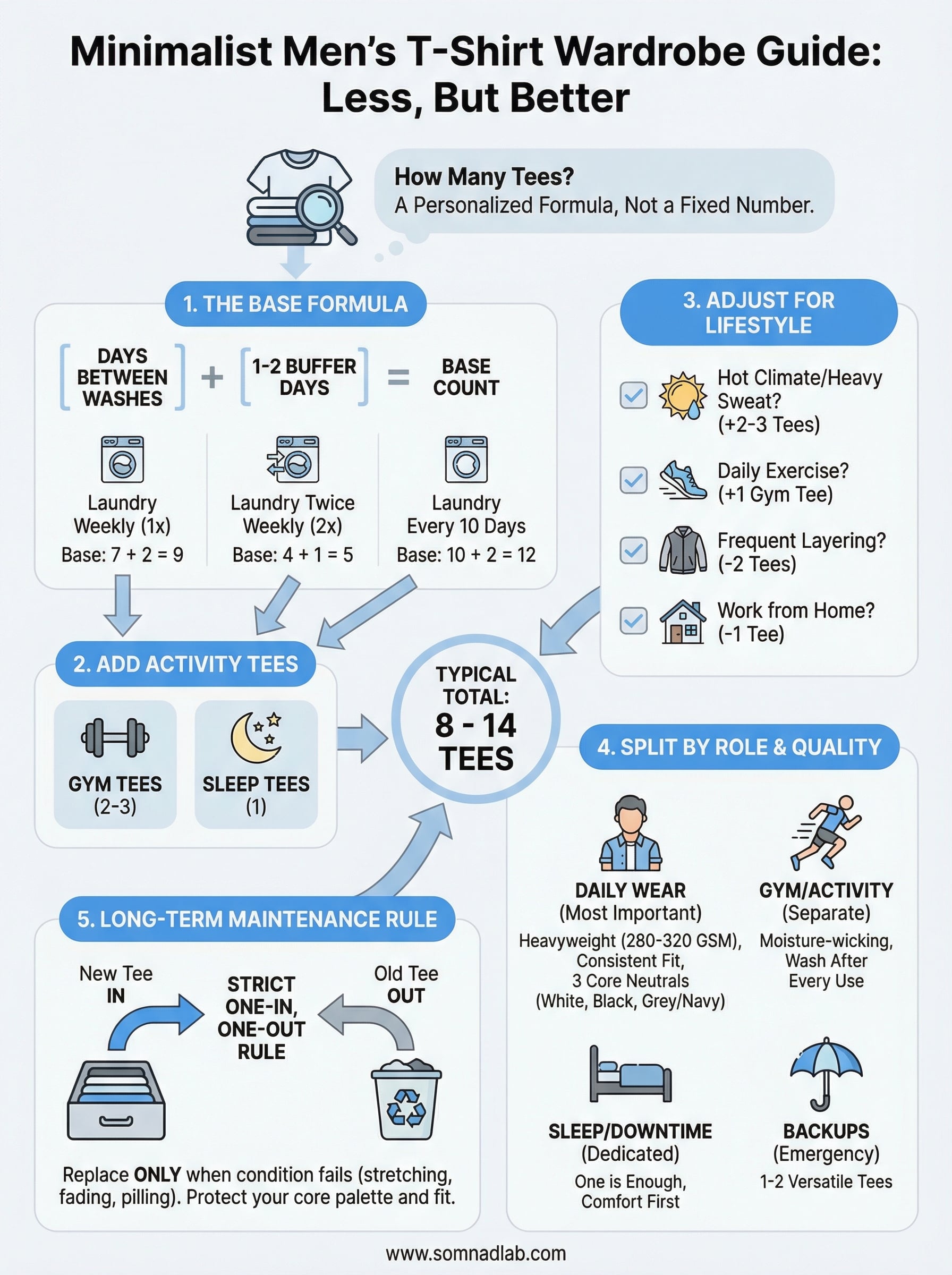
Final takeaways
The answer to how many t shirts should a man own minimalist wardrobe is not a fixed number. It is a number you calculate based on your laundry schedule, climate, sweat output, and the three functional roles your shirts need to fill. Most men land between 8 and 14 tees total when they run the formula honestly against their real habits rather than an idealized routine.
Your color palette should anchor to three neutrals, your fit should stay consistent across every shirt in the drawer, and your fabric weight should sit in the 280 to 320 GSM range so each shirt holds up through the heavy rotation a small collection demands. Replace shirts only when they fail your condition checklist, and follow a strict one-in, one-out rule from that point forward.
When you are ready to build your rotation on tees that last, start with SÖMNAD's premium everyday essentials.