


Most people own more clothes than they need and wear only a fraction of them. That cycle, buy cheap, wear once, repeat, is exactly what slow fashion principles push back against. It's a set of values built around intentional choices: buying less, buying better, and actually wearing what you own.
At SÖMNAD, this philosophy runs through everything we make. Our approach, premium fabrics, clean construction, zero logos, exists because we believe a single well-made tee should outlast a drawer full of disposable ones. We didn't build a brand around trends. We built it around the idea that basics done right shouldn't need replacing every few months.
This guide breaks down the core principles behind the slow fashion movement, what each one means in practice, and how to start applying them to the way you shop. Whether you're rethinking your wardrobe from scratch or just tired of clothes that fall apart after a few washes, you'll walk away with a clear framework for buying smarter, and a solid understanding of why less really does mean better.
What slow fashion is and is not
Slow fashion is a deliberate approach to clothing that prioritizes quality, longevity, and ethical production over speed and volume. It emerged as a direct response to fast fashion, the mass-production model that treats clothing as disposable and cycles through dozens of trend-driven collections each year. Sustainable design consultant Kate Fletcher is widely credited with coining the term around 2007, drawing a parallel to the slow food movement. At its core, slow fashion asks you to treat your wardrobe as something worth thinking about rather than reacting to.
What slow fashion actually is
Slow fashion is about making fewer, more considered purchases that hold up over time. It means choosing garments made from durable, high-quality materials, understanding where and how they were produced, and committing to wearing them for years rather than seasons. When you apply slow fashion principles consistently, your wardrobe shrinks in size but grows in usefulness. Every piece earns its place because it fits well, lasts, and works across multiple situations.
The goal isn't to own less for the sake of minimalism. It's to own things you actually use, wear, and value.
Slow fashion also connects to how workers are treated throughout the supply chain. Brands operating under this model tend to pay fair wages, use safer production methods, and keep output at a scale that doesn't require cutting corners to hit volume targets. That matters because production conditions and product quality are often two sides of the same coin. When a brand rushes manufacturing to meet trend cycles, both the worker and the garment suffer for it. Choosing slow fashion means choosing not to support that cycle, even when the alternative costs more upfront.
What slow fashion is not
Slow fashion is not the same as thrifting, vintage shopping, or simply spending more money on clothes. Those habits can align with slow fashion values, but they don't define it on their own. You can thrift impulsively and still behave exactly like a fast fashion consumer. You can spend a significant amount on a garment that falls apart after a few washes and completely miss the point.
It's also not a lifestyle brand or a visual aesthetic. Slow fashion doesn't require you to wear neutral tones, follow a capsule wardrobe formula, or announce your values on social media. The core shift is behavioral and intentional, not cosmetic. It comes down to how you decide what to buy, how long you keep it, and whether you actually wear what you own. A well-made black tee in heavy cotton that you reach for every week is a far better expression of these values than a curated feed full of conscious consumption content. The practice lives in your habits, not your image.
The core slow fashion principles
The slow fashion principles that guide this movement aren't complicated rules. They're practical commitments that change how you approach every purchase. Each one builds on the others, and together they shift your relationship with clothing from reactive to intentional.
Buy less, choose better
Fewer purchases made with more intention is the foundational shift. Before you buy something, ask yourself whether you'll still reach for it in three years, whether it works with what you already own, and whether the quality justifies the price. This filter doesn't necessarily lower what you spend, but it changes what you spend it on entirely. Impulse buys get replaced by deliberate choices.
Here are the questions worth asking before every purchase:
- Does this work with at least three things I already own?
- Is it made from a material that holds up to repeated washing?
- Would I buy it at full price, or am I only tempted because it's on sale?
Prioritize durability over trend
Fabric weight, construction quality, and finishing are the clearest signals of how long a garment will actually last. Heavier materials resist pilling and fading. Reinforced seams hold their shape. A piece built with these details in mind stays useful indefinitely, while a trend-driven piece gets retired the moment the moment passes.
The real cost of a garment isn't the price tag. It's the price divided by the number of times you actually wear it.
Transparency in production connects directly to durability. Brands that work at a controlled pace and disclose their supply chain tend to produce more carefully. When a company can't or won't tell you where its clothes are made or what its workers are paid, that gap usually shows up in the product itself. Cheap sourcing and rushed manufacturing don't just raise ethical concerns; they produce garments that fall apart faster and cost you more over time.
Why slow fashion matters
The clothing industry moves enormous volumes of product each year, and most of it ends up in landfills within a few years of purchase. Fast fashion's model depends on disposability, and that dependency carries real costs that extend well beyond your closet. Understanding why slow fashion principles matter means looking at both the broader consequences and the direct, practical benefits to you as a consumer.
The environmental cost of fast clothing
Textile production is one of the most resource-intensive industries in the world. Cotton farming alone consumes vast amounts of water, and synthetic fibers like polyester shed microplastics into waterways with every wash cycle. When you buy a garment built to last a decade instead of a season, you reduce the demand that drives that production. Each purchase you make sends a signal to the market about what you're willing to fund.
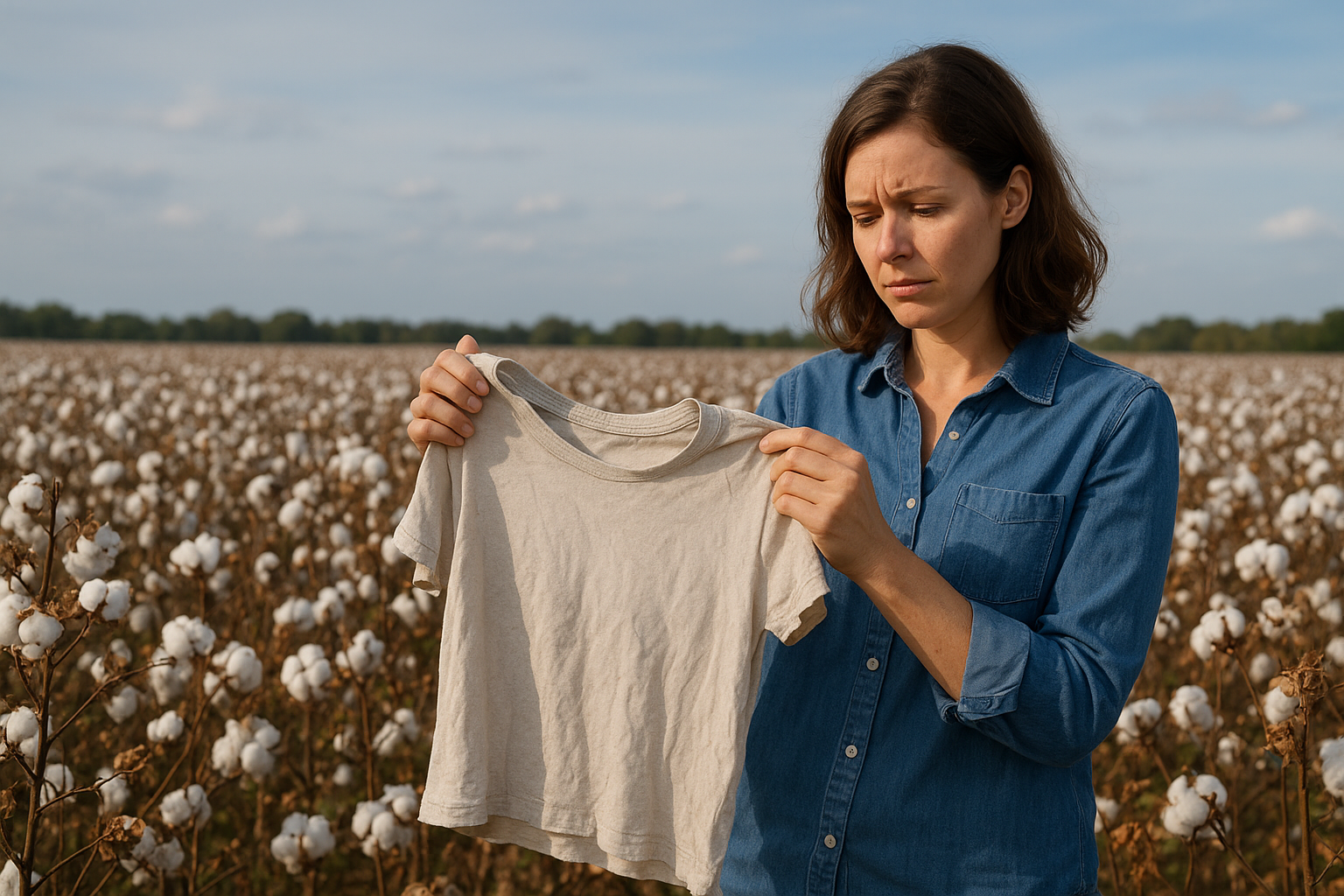
Buying one well-made piece instead of five cheap ones doesn't just save you money. It removes four garments from a cycle that strains water supplies, labor conditions, and waste systems.
The personal case for buying slowly
Slowing down your buying habits has a direct impact on your daily experience with getting dressed. When everything in your closet fits well, holds its shape, and works with the rest of what you own, you spend less time second-guessing choices. Decision fatigue drops significantly when your wardrobe contains fewer but more reliable pieces.
There's also a financial argument that gets overlooked. A $120 tee you wear 200 times costs you $0.60 per wear. A $30 tee you wear 15 times before it fades and loses its shape costs $2 per wear. The upfront price of a well-made garment almost always looks different once you factor in how long it actually serves you. Slow fashion isn't a luxury framework reserved for people with large budgets. It's a smarter way to spend whatever budget you have, regardless of where that number sits.
How to buy with slow fashion principles
Applying slow fashion principles to your actual shopping process doesn't require a complete wardrobe overhaul on day one. Start where you are: look at what you already own, identify the gaps that genuinely affect how you get dressed each morning, and use those gaps to drive what you buy next. That approach replaces trend cycles and sale-event impulses with decisions grounded in what you actually wear.
Start with what you already own
Before you open a browser or walk into a store, spend time with your current wardrobe. Pull out everything and ask yourself which pieces you reach for consistently and which ones sit untouched for months. The items you skip most often reveal your real preferences better than your purchase history does. Removing what you don't wear creates a more accurate picture of what's actually missing, and that picture should shape every new purchase you make.
What you already own is the most honest signal of what you actually need.
Look at materials and construction
When you evaluate a piece before buying, go straight to the fabric composition and weight. Heavier, natural fibers like Supima cotton, merino wool, and linen tend to hold their shape and soften with wear rather than break down. Check the seams, the stitching at stress points, and how the fabric handles tension. These construction details tell you more about longevity than any brand claim or marketing description can.
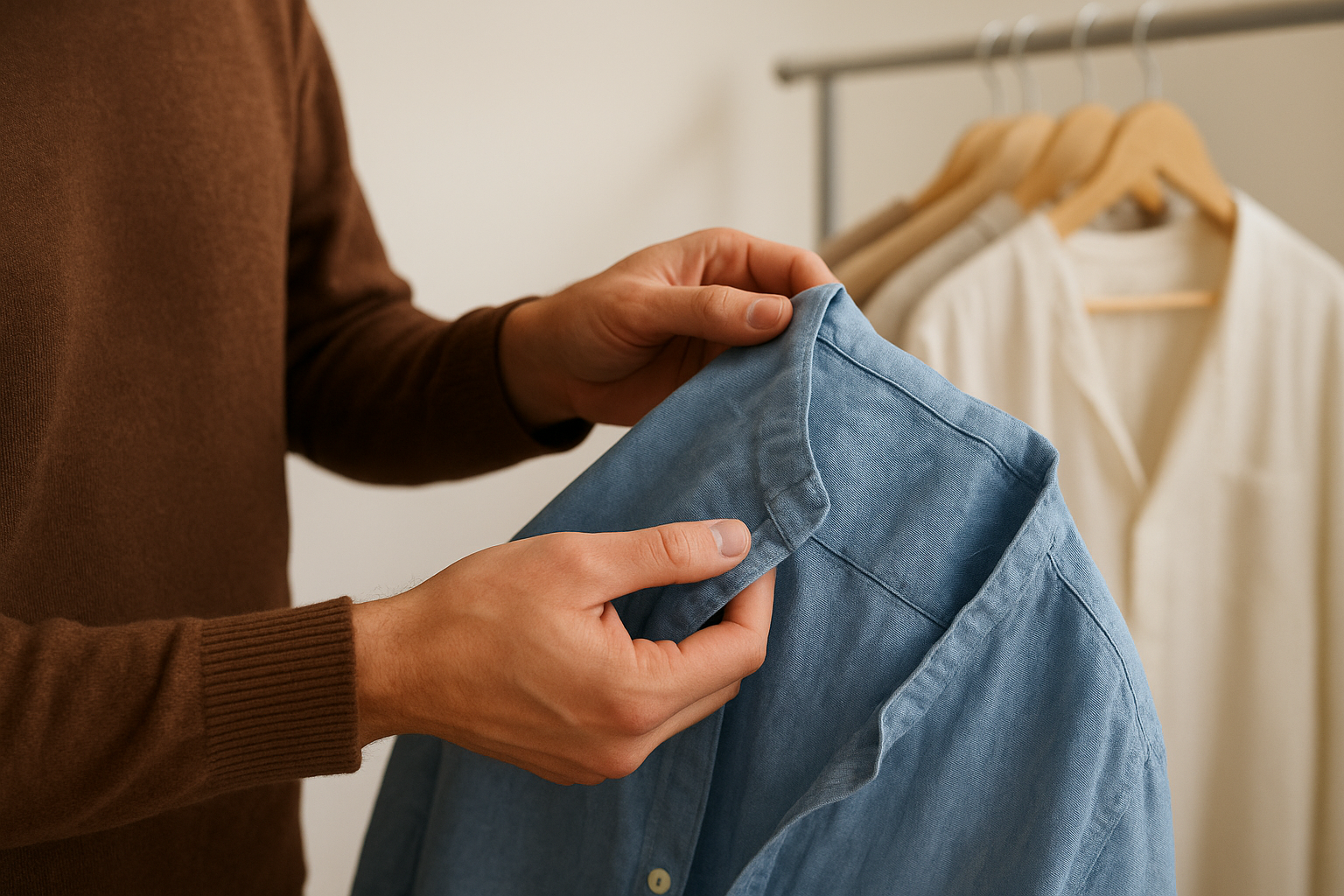
Here's a quick checklist to run through before committing to a purchase:
- Is the fabric weight substantial enough to resist pilling after repeated washing?
- Are the seams reinforced, particularly at stress points like shoulders and cuffs?
- Does the fit work with at least three items you already own?
- Would you still buy it at full price, or only because it's on sale?
Running through this list takes less than two minutes per item and eliminates most impulse purchases before they happen. Over time, the habit becomes automatic, and your wardrobe starts to reflect deliberate choices rather than reactive ones.
How to spot greenwashing
Greenwashing happens when a brand uses environmental or ethical language to make its products seem more responsible than they actually are. As slow fashion principles gain mainstream attention, more brands adopt the vocabulary without making meaningful changes to how they operate. Recognizing the difference between genuine commitment and surface-level messaging is one of the most useful skills you can develop as a consumer.
Watch the language brands use
Vague terms like "conscious," "eco-friendly," and "sustainable" carry no legal definition and require no verification. Any brand can print them on a hang tag without meeting a single environmental standard. When you see this kind of language on a product page, treat it as a prompt to dig deeper rather than a reason to trust. Look for specifics: what materials, what certifications, what production conditions.
If a brand can't back its environmental claims with verifiable details, the claim is doing little more than attracting attention.
Recognized third-party certifications provide a more reliable signal than marketing copy. Labels like GOTS (Global Organic Textile Standard) or Fair Trade require independent auditing before they can be used. A brand that passes external verification has demonstrated real accountability. One that only references its own internal sustainability goals has not.
Check for specific claims over vague ones
A genuine commitment to ethical production shows up in concrete, verifiable information: named factories, disclosed supply chains, published wage data, and material sourcing that traces back to a specific origin. When brands provide this level of detail, it takes real effort to produce and invites external scrutiny. That willingness to be scrutinized is itself a signal worth noticing.
Contrast that with brands that publish an aspirational mission statement but provide no supply chain transparency, no third-party auditing, and no data behind their claims. Broad language about "a better future" paired with no actionable specifics is the clearest greenwashing pattern to recognize. When the story sounds polished but the details are absent, treat that gap as your answer.
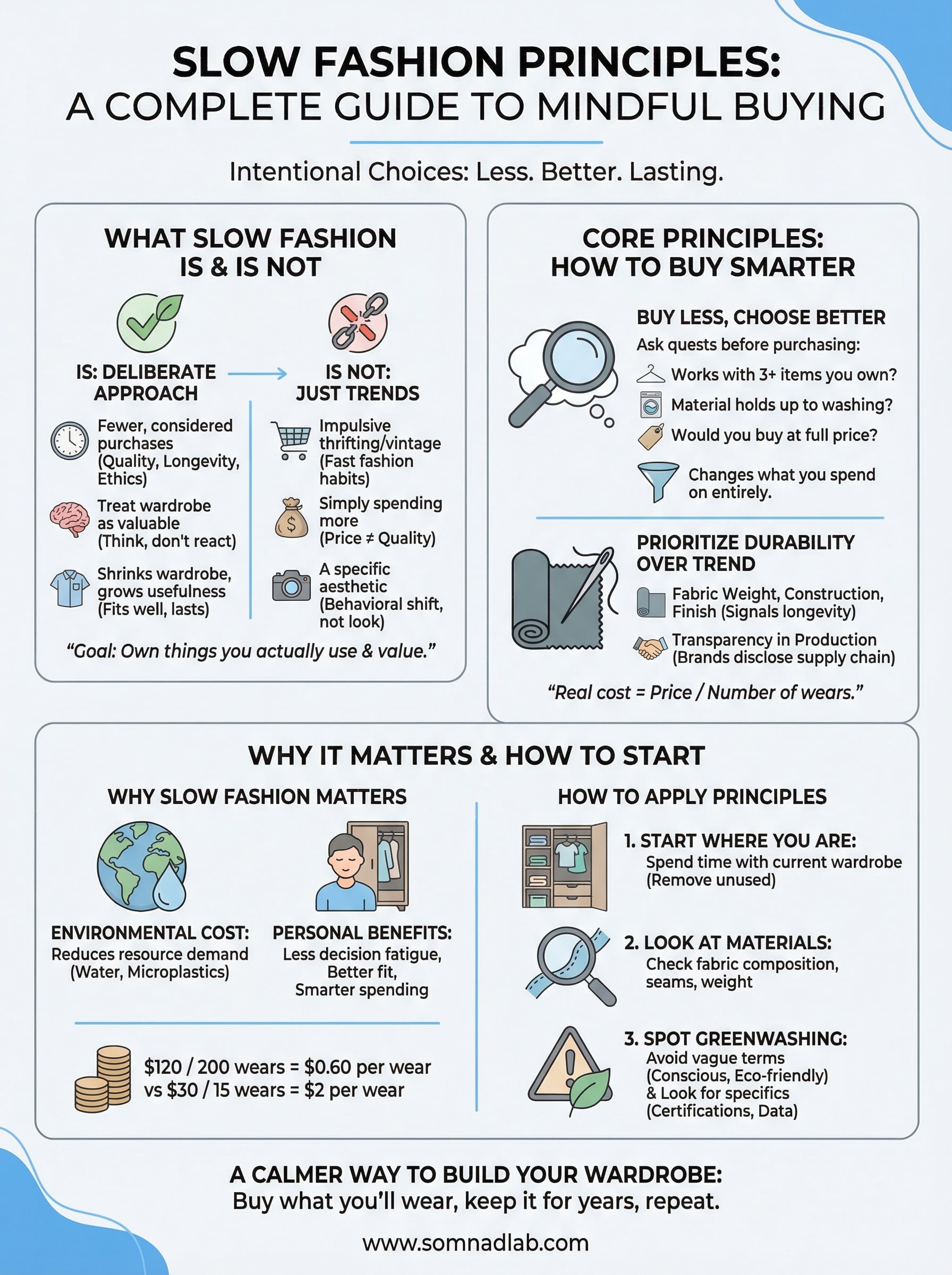
A calmer way to build your wardrobe
Applying slow fashion principles doesn't require a dramatic reset or a perfectly curated wardrobe overnight. It starts with one decision made more carefully than the last one. Buy what you'll actually wear, keep it for years, and repeat that process until your closet reflects real preferences rather than impulse purchases and trend cycles.
That shift changes how getting dressed feels every day. When everything you own fits well and holds its shape, the daily friction of deciding what to wear disappears. Your wardrobe becomes smaller in volume and more useful in practice, and you stop replacing the same items every year because they simply don't hold up.
If you want to start with a piece built on exactly that idea, shop the SÖMNAD relaxed tee. It's made from 300g Supima cotton with no logos and no excess, just a well-constructed basic designed to stay in your rotation for years.