


A white t-shirt is the hardest-working piece in any wardrobe, until it starts turning yellow under the arms or fading to a dull gray after a few washes. If you've ever wondered how to keep white t-shirts white, you're not alone. It's one of the most common frustrations with an otherwise perfect staple.
At SÖMNAD, we build our tees from 300g Supima cotton specifically because premium fibers hold up better over time, but even the best fabric needs proper care. Material quality gets you ahead of the curve; how you wash, dry, and store your whites determines whether they stay bright or slowly lose their edge. No amount of craftsmanship can outrun bad laundry habits.
This guide covers the specific techniques, products, and routines that actually work, from preventing discoloration before it starts to rescuing shirts that have already dulled. Practical steps, no guesswork.
What causes white tees to yellow or gray
White fabric is a blank canvas. Every substance it contacts leaves a mark, and the yellowing or graying you see on your white tees follows predictable patterns with specific causes. Understanding what's actually happening at the fiber level is the foundation of knowing how to keep white t-shirts white, because you can't fix a problem you haven't identified.
Sweat, oils, and deodorant buildup
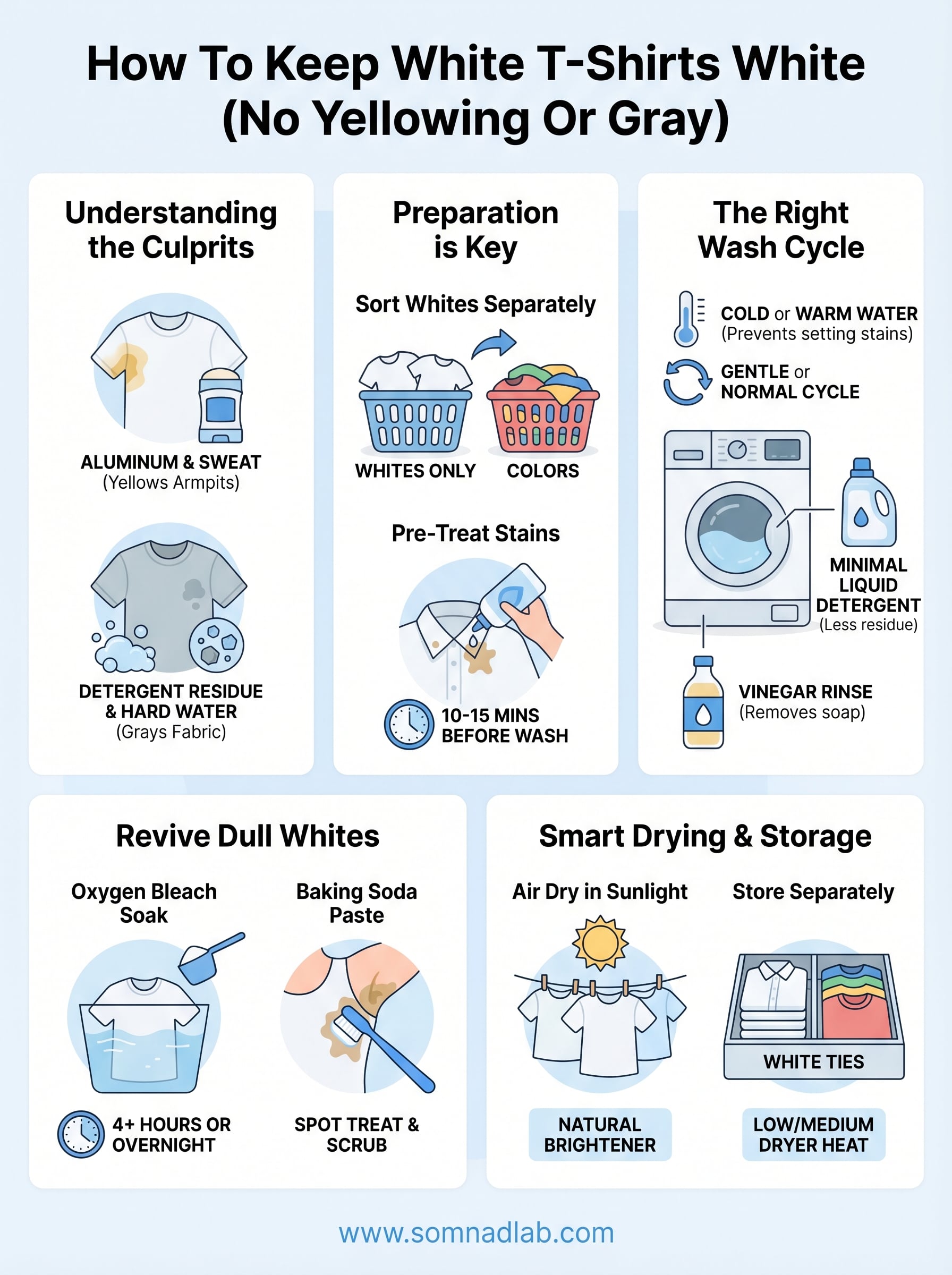
Body oils and sweat are the main culprits behind yellow underarm stains. Sweat itself is mostly water, but it carries proteins and salts that bond with cotton fibers over time. The bigger issue is the aluminum compounds in most antiperspirants, which react with those proteins under heat to create the yellow-brown residue concentrated in the armpit area. If you apply deodorant and then immediately put on your shirt, some of that product transfers directly to the fabric before it fully dries.
The aluminum-sweat-fabric reaction is why yellowing concentrates specifically under the arms, even if the rest of the shirt still looks clean.
Detergent residue and hard water
Using too much detergent is a surprisingly common mistake. Excess soap doesn't fully rinse out, leaving a film on the fibers that dulls brightness with every wash. If your water supply is hard water (high in calcium and magnesium minerals), those minerals deposit on the fabric during each cycle and build up a gray or chalky cast that gets progressively worse over time.
Heat and oxidation
Hot water and high dryer heat accelerate the breakdown of cotton fibers and permanently set protein-based stains, making yellowing much harder to reverse later. White fabric also naturally oxidizes when exposed to air and light over time. Storing shirts while they're still slightly damp speeds that process up, and folding white tees next to colored fabrics risks dye transfer that gradually shifts whites toward a gray or off-white tone.
Prep and sort before you wash
What you do before the cycle starts matters more than most people expect. Sorting correctly and pre-treating problem areas sets the foundation for how to keep white t-shirts white wash after wash, not just the first couple of times out of the bag.
Sort whites from everything else
Always wash your whites in their own load. Even light-colored fabrics like pale gray or soft cream release trace dye over repeated cycles, and that dye gradually pulls your whites toward an off-white or dingy gray. Sort by color first, then double-check that nothing saturated has slipped into the pile.
One dark item in a white load can cause dye transfer that no amount of bleach will fully undo.
When in doubt, run a smaller whites-only load rather than adding questionable items just to fill the drum.
Pre-treat stains before loading
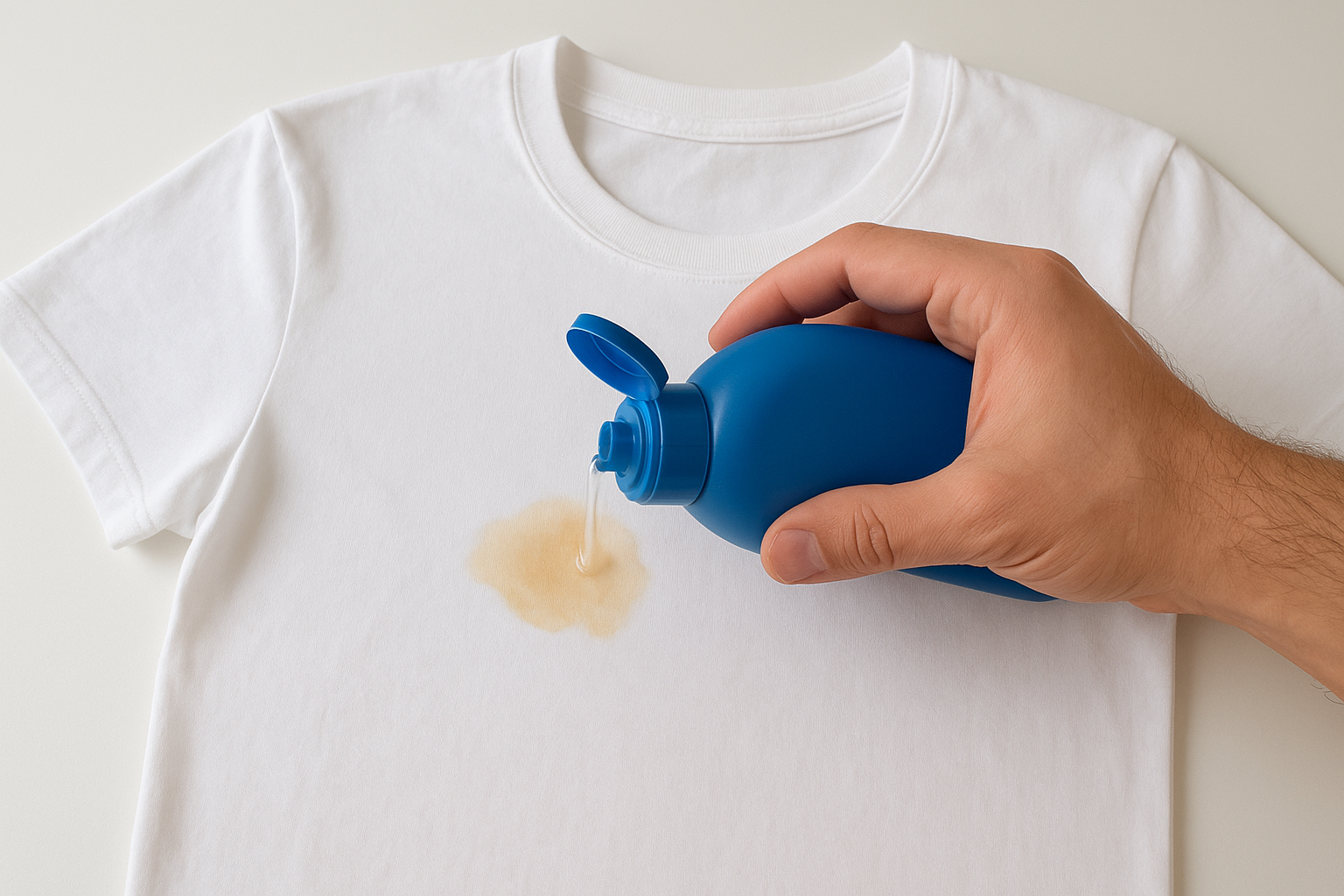
Check each shirt for deodorant buildup and collar stains before it goes in the machine. Apply a small amount of liquid detergent or an oxygen-based pre-treatment directly to the underarm area and any visible discoloration. Let it sit for 10 to 15 minutes before loading. This step breaks down the protein and oil bonds responsible for yellowing before heat has any chance to set them permanently into the fiber.
Wash whites the right way
Getting the machine settings right is where most people lose the battle with white fabric. Temperature, detergent choice, and cycle type all directly affect whether your whites come out bright or dull. Learning how to keep white t-shirts white at the machine level makes the entire routine more predictable.
Water temperature and cycle settings
Use cold or warm water for your whites, not hot. Hot water permanently sets protein-based stains and breaks down cotton fibers faster than lower temperatures. Set your machine to a gentle or normal cycle for everyday whites. Here's a quick reference:
| Setting | What to use |
|---|---|
| Water temp | Cold (60-80°F) or warm |
| Cycle type | Gentle or normal |
| Spin speed | Medium |
Cold water cleans lightly soiled whites just as effectively as hot, with significantly less fiber damage over time.
Detergent type and amount
Choose a liquid detergent designed for whites, which typically contains optical brighteners that reflect light and make fabric appear cleaner. Use the minimum recommended amount listed on the label. Excess detergent leaves residue on the fibers that accumulates with each wash and gradually grays the fabric. Adding half a cup of white vinegar to the rinse cycle strips leftover soap and softens cotton naturally.
Fix yellowing and dingy whites
When prevention falls short and a shirt already looks dull, targeted treatments work better than running another standard wash cycle. Knowing how to keep white t-shirts white includes knowing how to reverse existing damage, not just avoid it. Most yellowing and gray buildup responds well to a deliberate soak before you send the shirt back through the machine.
Oxygen bleach soak
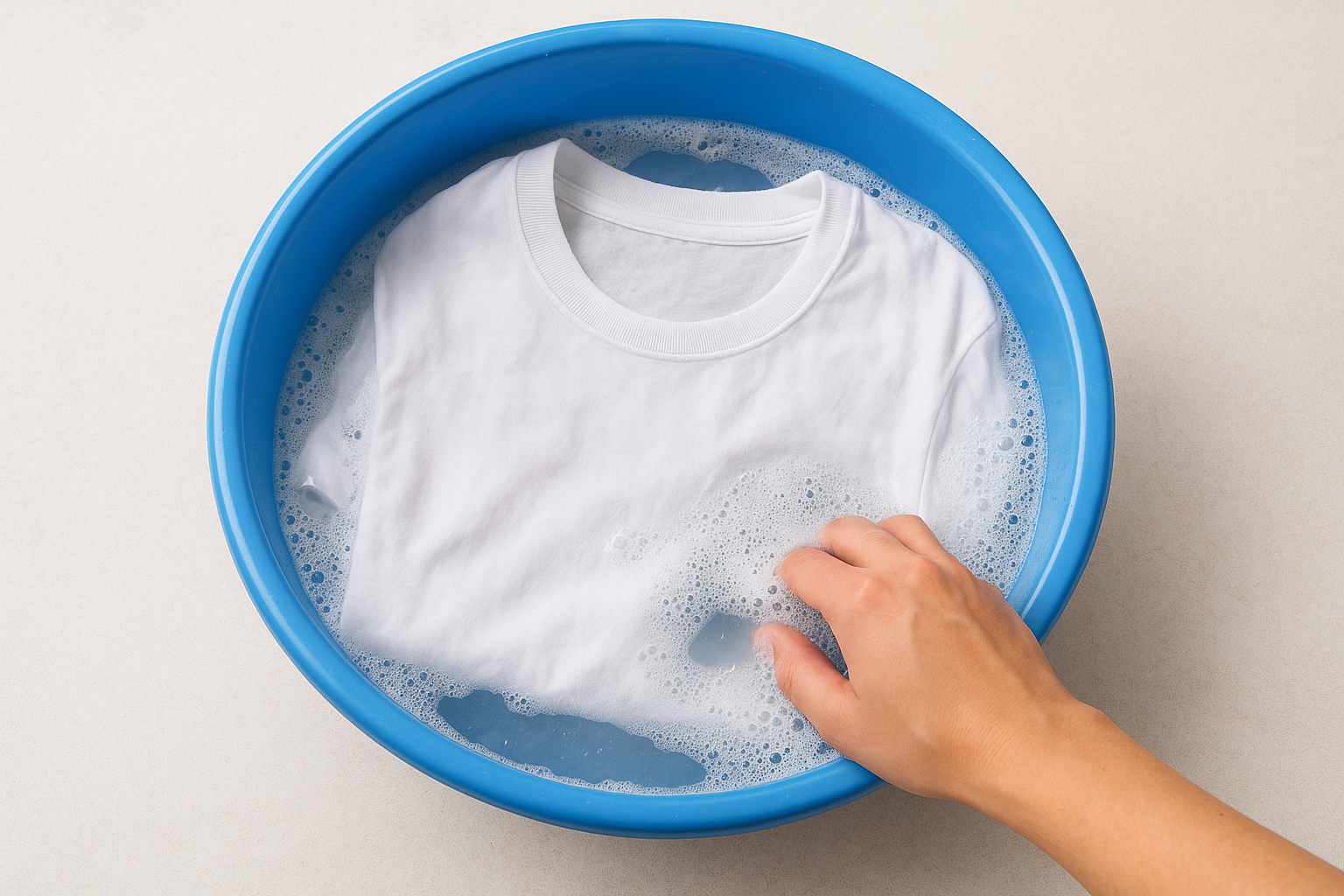
Oxygen bleach (like OxiClean) is the most effective option for restoring dingy whites without the fiber damage that chlorine bleach causes over repeated use. Dissolve two scoops in a bucket of warm water and submerge the shirt for four to six hours, or overnight for heavier yellowing. Rinse thoroughly and run a normal wash cycle after soaking.
| Stain type | Soak time |
|---|---|
| Light gray cast | 2-4 hours |
| Yellow armpit stains | 4-6 hours |
| Deep or set-in yellowing | Overnight |
Oxygen bleach is safe for most cotton blends, but always check the care label before soaking.
Baking soda paste for spot treatment
Baking soda mixed with a small amount of water creates a gentle abrasive paste that lifts surface discoloration on collar and underarm areas. Apply it directly to the stain, let it sit for 30 minutes, then scrub lightly with an old toothbrush before washing. For stubborn spots, combine the paste with a small squeeze of lemon juice to boost the lifting action.
Dry, store, and prevent future stains
Drying and storing your whites incorrectly undoes everything the wash cycle accomplished. Protecting your progress at this stage is just as important as any treatment you applied before or during the wash, and it's where most people underestimate how to keep white t-shirts white over the long run.
Dry whites correctly
Avoid high dryer heat whenever possible. Air drying your white tees outdoors in direct sunlight is the most effective natural brightening method available. Sunlight acts as a mild bleaching agent and kills residual bacteria that contribute to odor and yellowing. If you use a dryer, select a low or medium heat setting and pull shirts out while they're still slightly damp, then lay them flat to finish drying.
High heat permanently sets any remaining stains and accelerates fiber breakdown, shortening the lifespan of your shirts significantly.
Store whites separately
Store your white tees away from colored clothing in a cool, dry drawer or shelf. Folding whites next to saturated dyes creates gradual color transfer that shifts your shirts toward gray over time. Keep each tee completely dry before folding, and consider placing acid-free tissue between stacked whites if you're storing them for an extended period.
Keep your tees bright for the long run
Knowing how to keep white t-shirts white comes down to a handful of consistent habits rather than any single trick. Sort your whites before every wash, pre-treat underarm areas, use cold water with the right detergent amount, and air dry when you can. Each step reinforces the others, and the results compound over months and years of wear.
The quality of your fabric shapes how much work your care routine has to do. Premium cotton like 300g Supima holds its structure and resists dullness longer than thinner alternatives, which means less rescue treatment and more reliable results from your standard wash. Starting with a better shirt makes every other step in this guide more effective.
If you want a white tee built to stay bright with proper care, explore SÖMNAD's everyday essentials and see what the right materials look like from day one.